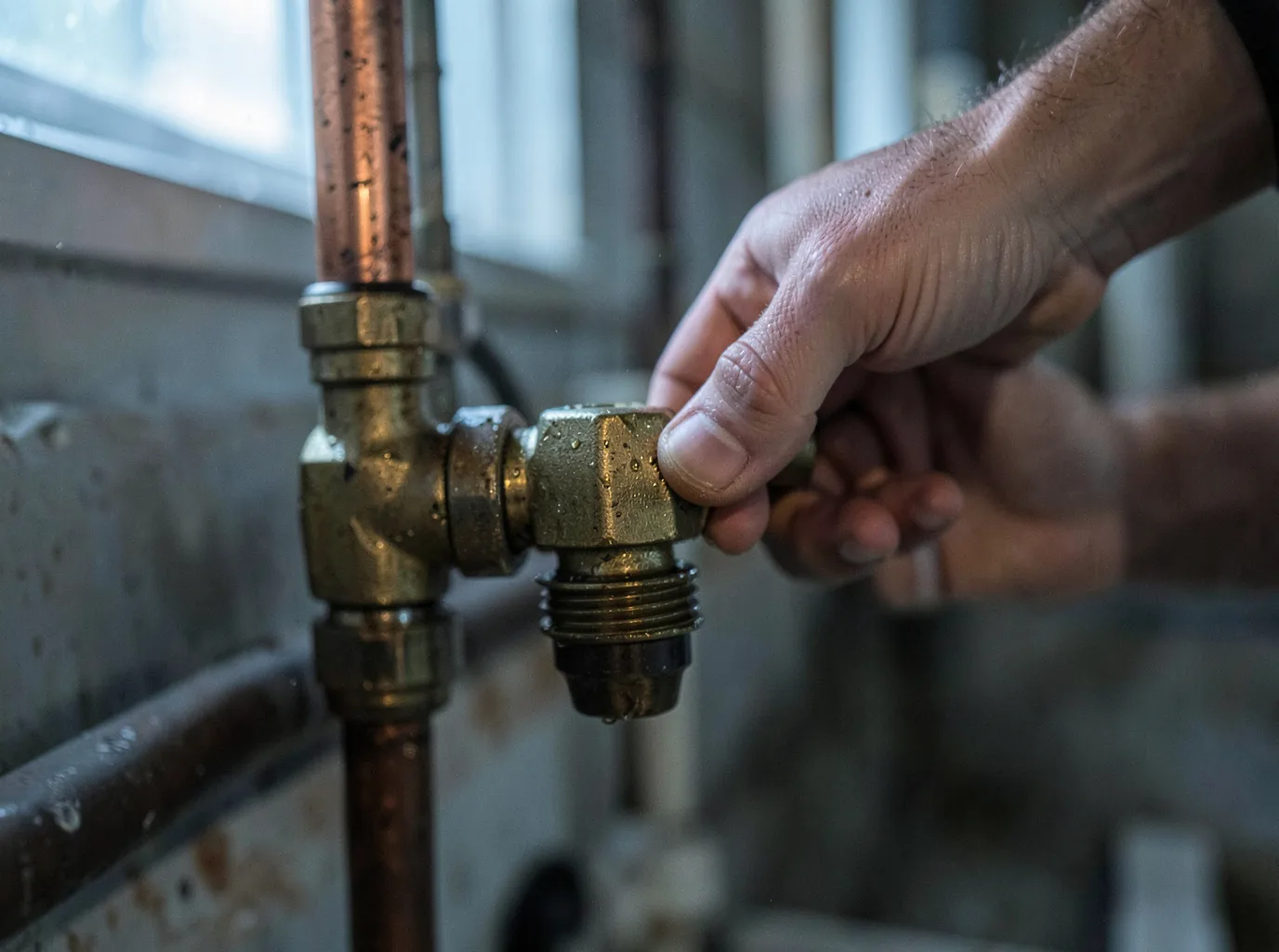
A toilet that runs constantly isn't usually an emergency, but it's worth calling about sooner than later since it wastes water around the clock and often signals a part that's about to fail more visibly, like a supply line letting go overnight. A toilet rocking on its base, leaking at the floor, or with a supply line that's actively spraying is a different story and worth acting on right away: close the toilet shut off valve behind the tank to stop water flow, and if water's already reached the floor, place towels down and check whether it's pooling toward any electrical outlets nearby.
Calling (831) 300-2203 connects you with a plumber serving Manvel, ND who can talk you through the shut-off steps if you're not sure where the valve is.
Common toilet problems
- Running toilet that won't stop filling or refills randomly
- Weak or incomplete flush
- Rocking or unstable base
- Water pooling at the base of the toilet
- Tank that's slow to refill or makes a high-pitched whine
- Constantly clogging even with normal use
- A crack in the tank or bowl
- The handle needing to be jiggled to stop running, or not flushing on the first try
What's usually behind it
Older toilets accumulate wear across several parts at once rather than one obvious failure, which is why a toilet that's ten or fifteen years old sometimes needs more than a single part replaced to actually stop the problem for good. A running toilet almost always comes down to the flapper or the fill valve. A worn or warped flapper doesn't seal fully against the flush valve seat, so water keeps trickling from tank to bowl, and you'll often hear the fill valve kick on periodically to compensate even when no one's used the toilet.
A fill valve that's failing outright can overfill the tank until it spills into the overflow tube, which also reads as a toilet that never stops running. A wobbly toilet usually means the wax ring seal at the base has failed or the flange bolts have loosened, which lets the toilet shift slightly with every use, and left alone, that movement eventually breaks the wax seal completely and causes a leak at the floor.
A weak flush can trace back to a partially clogged trapway, low water level in the tank, or, on older toilets, mineral buildup restricting the rim jets that are supposed to push water around the bowl.
What a plumber does on site
For a running toilet, a plumber checks the flapper seal and flush valve seat, the fill valve's shut-off level, and the chain length connecting the flapper to the flush handle, since a chain that's too short or tangled can hold the flapper open just enough to leak. These are typically straightforward swaps. For a rocking or leaking toilet, the plumber pulls the toilet off the flange entirely to inspect the wax ring, check the condition of the flange itself (older cast iron flanges can crack or corrode), and reset the toilet with a new seal, sometimes with a flange extender if the finished floor height has changed over the years from tile or flooring work.
If the toilet itself is cracked, old, or simply worn past the point of parts being worth replacing, the plumber can walk you through toilet replacement options instead, since a plumber to replace a toilet handles both removing the old unit and setting the new one with a fresh wax ring and updated supply line.
What affects the price
Whether it's a part swap (flapper, fill valve, supply line) or something requiring the toilet to be pulled and reset, whether the flange itself needs repair, whether it's a repair or a full toilet replacement, and the age and accessibility of the toilet and shut-off valve. As always, the plumber inspects it and gives you a price before doing anything.
Before the plumber arrives
If it's running, you can try jiggling the handle or checking whether the flapper chain is caught, though this usually only holds things over until a plumber looks at it. If it's rocking or leaking at the base, use the shut off valve to stop water flow and avoid using that toilet until it's looked at. If a supply line is actively spraying, shutting the valve is the priority over anything else. Mopping up standing water helps prevent it from reaching flooring or a ceiling below if the bathroom is upstairs.
Why call this line for toilet repair
Running water and a wobbling toilet both tend to get worse the longer they sit, and calling (831) 300-2203 connects you with a local plumber serving Manvel, ND without needing to fill out a form and wait for a callback. The line takes calls any time, so a running toilet you notice at 11pm doesn't have to wait until morning to get addressed. If the issue turns out to be a stubborn clog rather than a worn part, that's covered on the Clogged Toilet Repair page as well.
Questions people ask about toilet repair
Why does my toilet keep running? The most common cause is a worn flapper that isn't sealing against the flush valve, letting water trickle from the tank into the bowl continuously. A failing fill valve is the other frequent cause. A plumber for a running toilet can usually identify which part is at fault within a few minutes.
How do I turn off the water to my toilet? Locate the toilet shut off valve on the supply line behind or beside the toilet, close to the floor, and turn it clockwise until it stops. This is the fastest way to stop a running or overflowing toilet without touching anything inside the tank.
Why is my toilet rocking or wobbling? This usually means the wax ring seal underneath has failed or the bolts holding the toilet to the flange have loosened. Left alone, the movement wears the seal further and eventually leads to a leak at the floor, so it's worth addressing before that happens.
Should I repair my toilet or replace it? Running toilets, weak flushes, and wobbly bases are usually repairable with new parts. A cracked tank or bowl, or a toilet that's old enough that replacement parts are hard to source, generally makes more sense to replace. A plumber can look at the specific toilet and give you a straightforward answer.
Is a running toilet worth calling about right away? It's not usually an emergency in the sense of needing an overnight call, but it wastes water continuously and can be a sign the fill valve is close to failing more seriously, so getting it looked at within a day or two is a reasonable target.
Can a toilet be repaired if the tank or bowl is cracked? Not usually. A hairline crack tends to spread with the tank's weight and water pressure, and a cracked bowl or tank is one of the few toilet problems where replacement is the practical answer rather than a patch. A plumber can confirm whether a crack you're seeing is cosmetic or structural before recommending either path.
A toilet that won't stop running or a base that's started to rock is worth addressing before it turns into a bigger repair. Call (831) 300-2203 to reach a plumber serving Manvel, ND.